
 By Mike Lee
In manufacturing, quality control is sometimes treated as a behind-the-scenes technical function. In reality, it has a direct influence on revenue, customer loyalty, and long-term growth. While engineers focus on tolerances and inspection protocols and sales teams concentrate on winning new business, both are ultimately shaped by the same factor: the consistency and reliability of the product.
When products perform as promised, customers return. When they do not, even the strongest sales strategy cannot compensate for lost trust.
Clarifying the Role of Quality Control
Quality control is often confused with quality assurance, yet the two serve different purposes. Quality assurance is centered on building strong systems and repeatable processes. Quality control is focused on verifying that finished goods meet established standards before they leave the facility. Its mission is straightforward: stop defects before they reach the customer.
Every inspection, test, and documented review supports that goal. Once this purpose is clearly understood, the link between quality control and business performance becomes obvious. Fewer defects mean fewer returns, stronger customer confidence, and greater opportunity for repeat orders.
The Ripple Effect of Defects
Defective products affect more than a single transaction. When issues are caught early, manufacturers may still face replacement costs, shipping expenses, and strained client relationships. These disruptions consume time and erode margins.
When defects go unnoticed and products enter real-world use, the consequences can escalate. Financial losses, operational failures, safety risks, and potential legal exposure can follow. Reputational damage can be difficult to repair and may push customers toward competitors permanently.
Quality as a Growth Strategy
On the positive side, a strong reputation for quality becomes a powerful sales asset. Consistently high standards build credibility in the marketplace. Customers are more likely to recommend reliable suppliers, renew contracts, and accept premium pricing when performance is dependable.
For manufacturing startups and established firms alike, quality control should be viewed as a strategic investment rather than a cost center. It strengthens brand positioning, protects revenue, and reinforces long-term competitiveness.
In the end, quality control is not just about preventing mistakes. It is about building confidence, earning loyalty, and supporting sustained growth in a demanding marketplace.
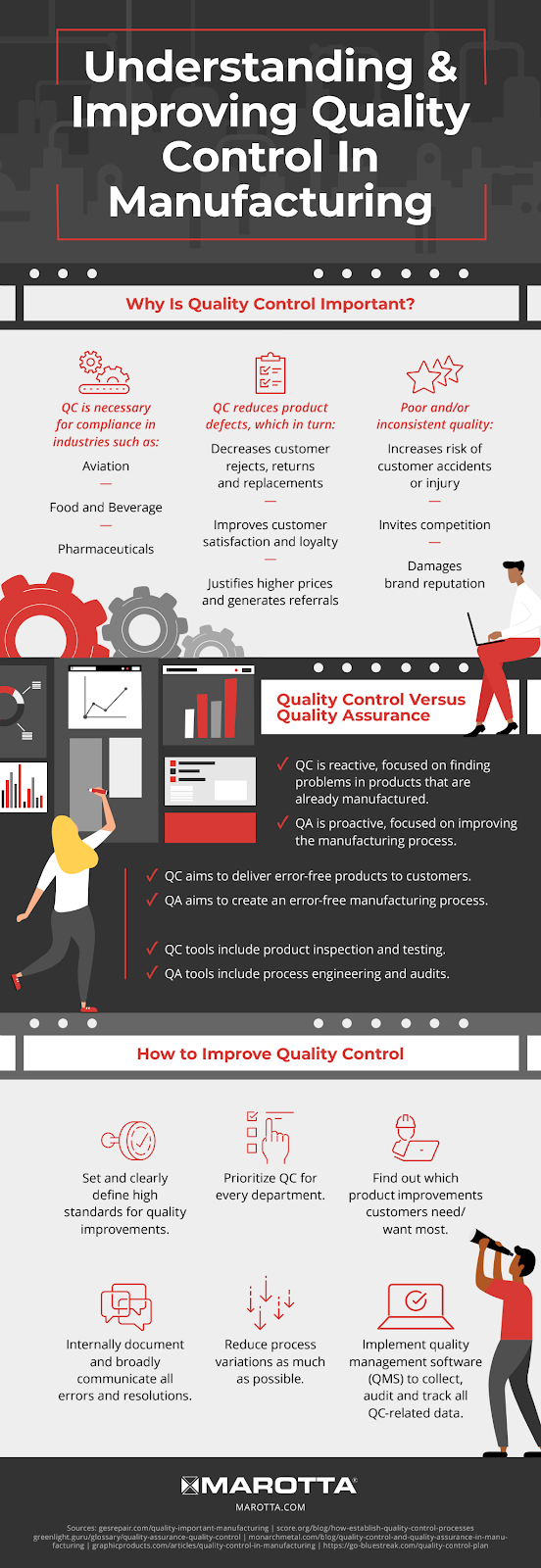
To learn more about quality control and how to improve it in your organization, please continue reading the graphic below from Marotta Controls, an AC DC power converter manufacturer.